
"Dizzy" by The Wonder Stuff has been going around my head since I got home.
If you know the song, you'll understand why it feels appropriate. The conference is done, the drive home is done, the long sleep that always follows two days of intense input is done. And now I'm sitting with a brain full of fragments that haven't yet decided what they want to be.
I've learned not to rush this part.
As a neurospicy, sociable introvert, I am exceptionally selective about which rooms I walk into. Jim Rohn said it plainly: "You become like the five people you spend the most time with. Choose carefully." Jackie Goddard, one of the day's speakers, brought that quote back to the front of the room and the front of my mind. It landed, as it always does, as both reminder and provocation.
For those of us who feel everything more intensely, who process deeply and recharge in silence, this isn't just good advice. It is a survival strategy and a growth strategy rolled into one.
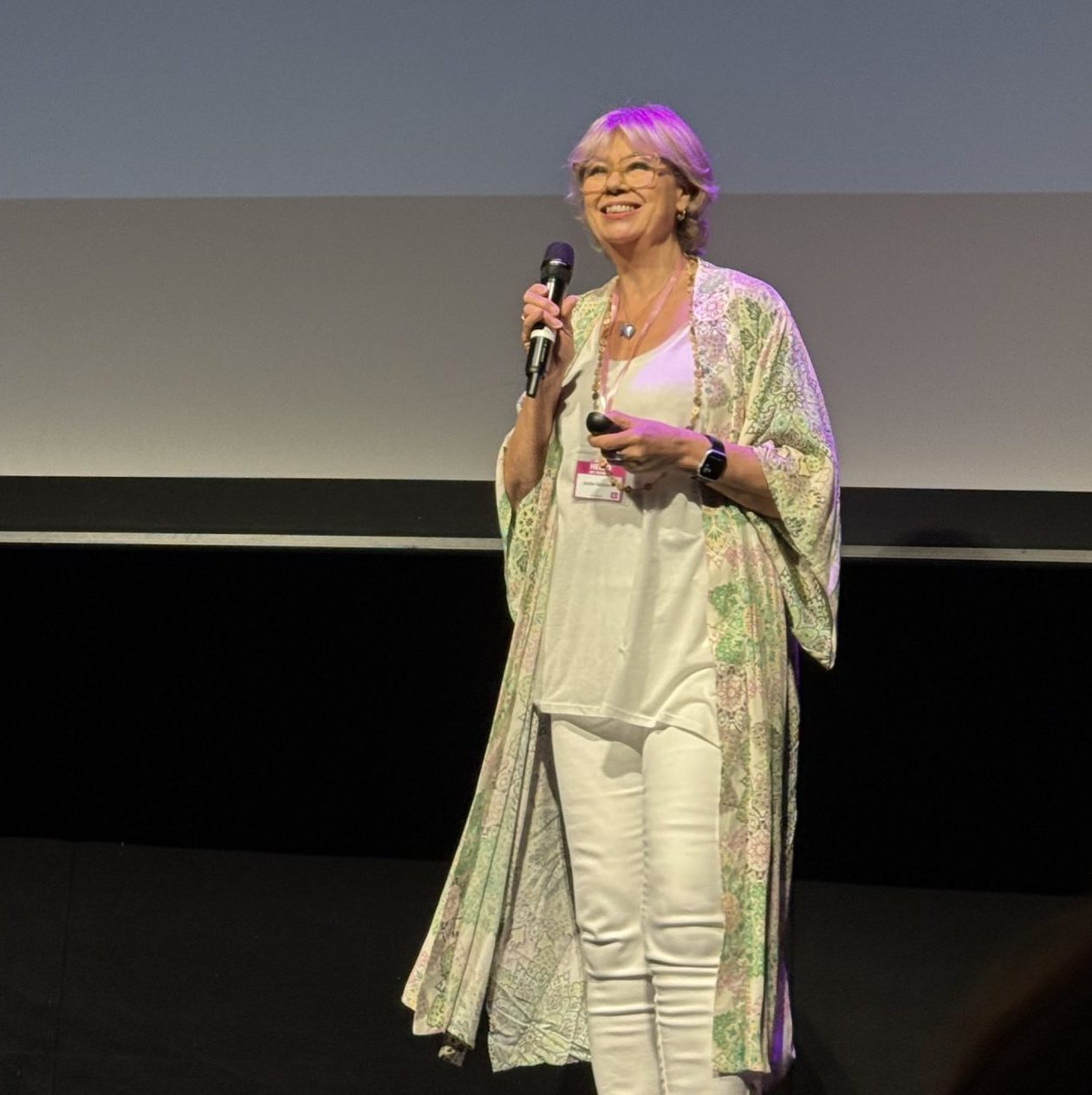
Jackie Goddard speaking at Creator Day
Creator Day, run by Mark Masters, is one of those rooms. I choose it every year because the people in it are builders, thinkers, and makers who take their work seriously and each other generously. It is not a room full of noise for noise's sake. It is a room where ideas are treated with respect.
The Morning After
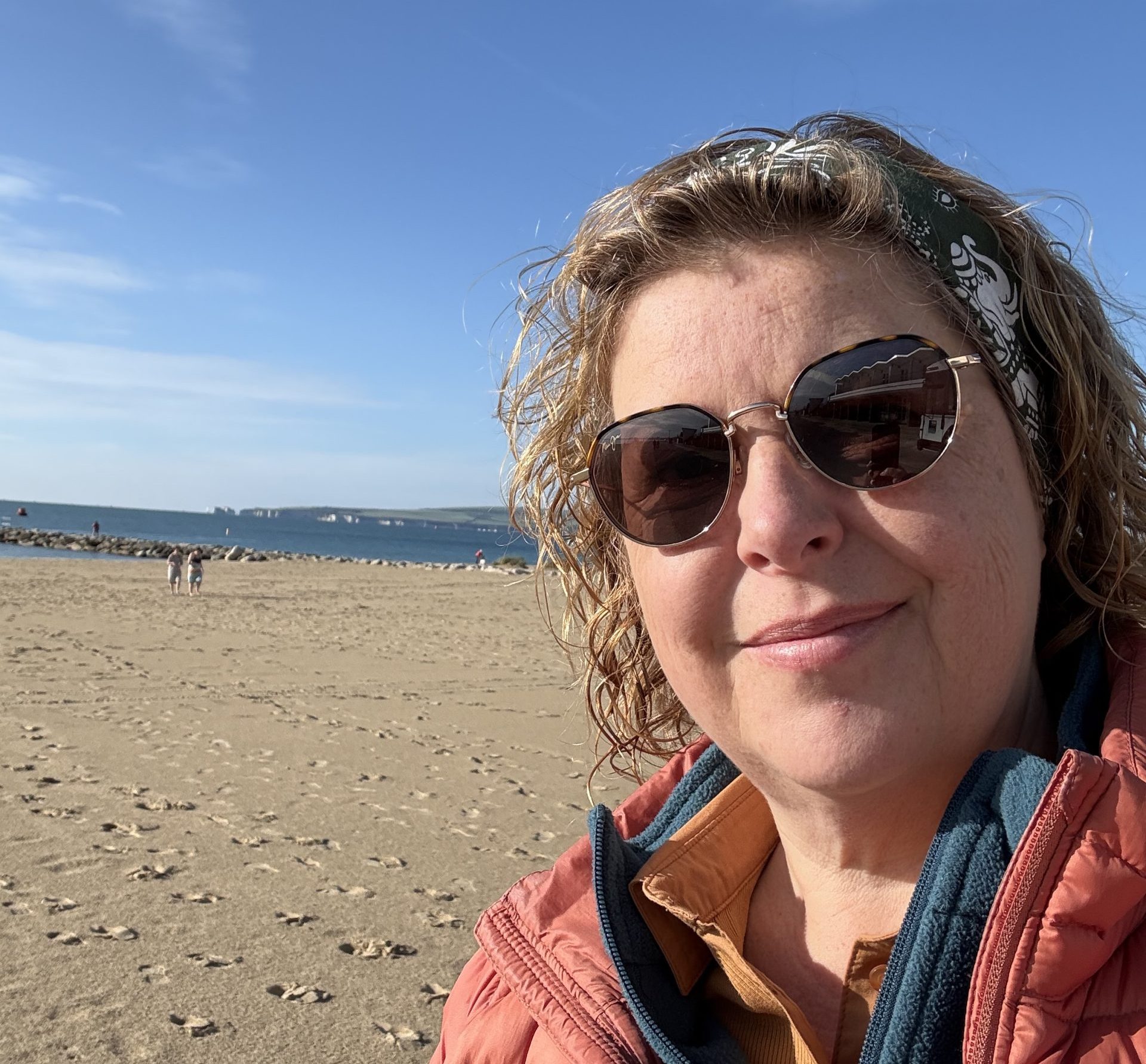
I didn't reach for my phone the morning after the conference. I went to the beach.
An hour's walk along the shoreline. No music. No podcast. No voice notes. Just the sound of waves and the particular quality of quiet that only comes when you stop trying to process and simply let things settle.
This is not where my ideas form. This is where the static clears.
There is a difference, and it matters enormously. The walk isn't productive in any conventional sense. It is the essential precondition for everything that follows. You cannot build a clear structure on top of noise, and after two days of rich input, my brain needed space before it needed direction.
By the time I got back, something had shifted. Not crystallised, not yet structured, but the interference had quietened. I could begin to sense which threads wanted to be followed.
The sketching will come. Probably tomorrow, possibly the day after. From experience, I know I won't open the sketchbook until the ideas are ready to meet the page, and they're not quite there yet. That's exactly as it should be.
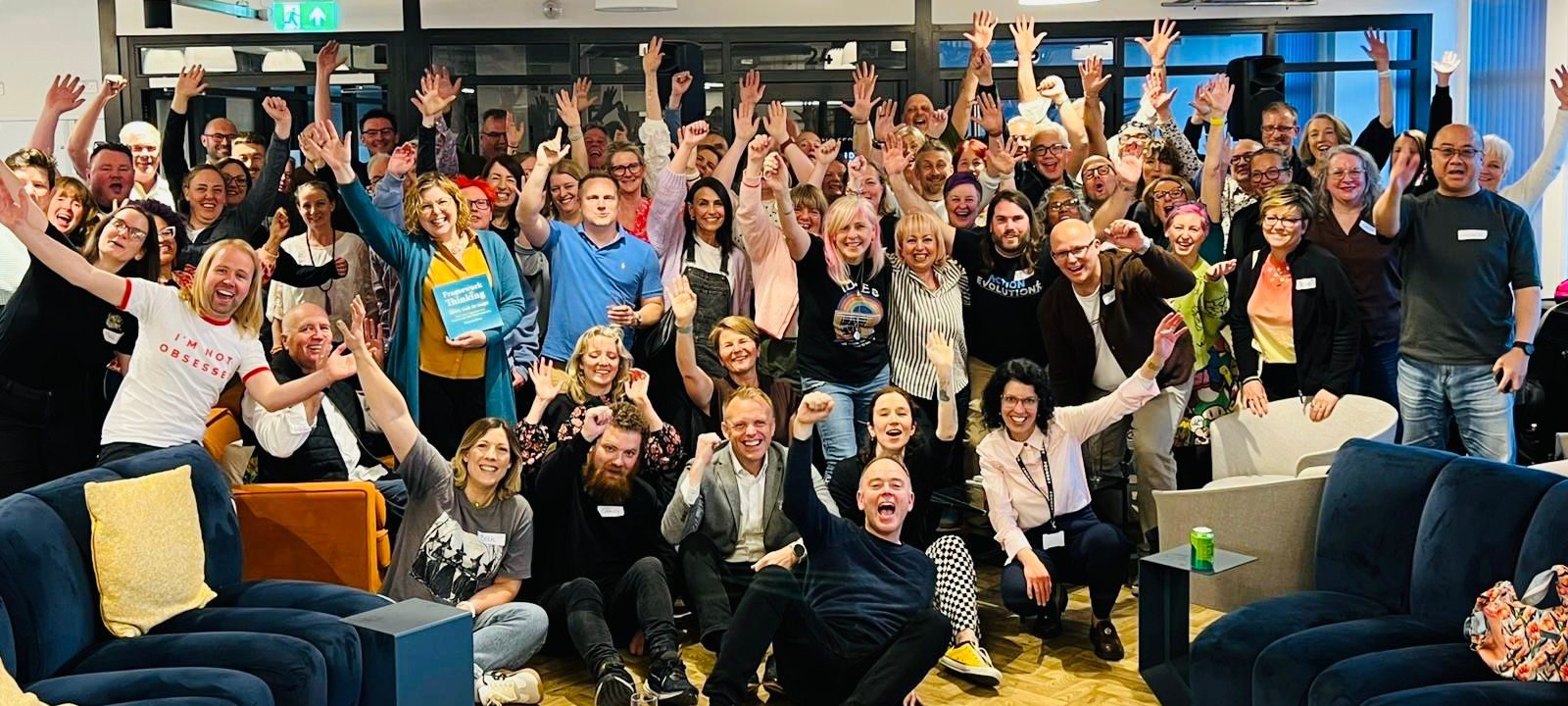
What This Year's Conference Cracked Open
The theme of Creator Day this year was community. And it landed in me the way the best conference themes do: not as a topic to observe, but as a question to sit with.
One of the talks that lodged deepest was from Jon Alexander, author of Citizens. He shared case studies in collective intelligence, including how Taiwan moved through and out of the COVID pandemic faster than most, not by top-down control, but by pulling in the hive mind. By treating citizens as participants rather than subjects. By trusting that together, people are bigger, better, and stronger than any single leader directing them from above.
That resonated with something I've been quietly holding for a while.
Framework Thinking® is the start of a movement. I've known this for the last two years as the book has been taking shape, but the name and the certainty are relatively recent. The deeper impulse goes back much further, as I'll come to shortly. What I don't yet know is what the movement looks like in practice.
I'm honest enough with myself to know that high-energy discussion forums, the kind that need a host who is always present, always feeding the conversation, always holding the space, are not aligned with how I work or where my energy lives. Building something that requires that kind of constant maintenance would contradict everything Framework Thinking® stands for.
So the shape of this community is still unknown to me. And I think that's right.
My instinct is that my first readers will provide the answer. The people who have already found me, read the book, begun to apply these ideas, will show me what they need and what they want to build together. The best leaders, I believe, are those who listen carefully to the people who wish to follow, rather than dictating the path from the front.
This is one of the questions going into the sketchbook when it opens. It may take months to answer. It may take years. I'm comfortable with that.
How Do You Know Which Business Ideas Are Worth Keeping?
This is the question I get asked most often, in various forms. How do you know what to build? How do you separate the ideas that matter from the ones that simply feel urgent in the moment? How do you tell the difference between a load-bearing concept and attractive fluff?
My answer, always, is this: sketch it.
Not design it. Not plan it. Sketch it, in the roughest possible sense. Get it out of your head and onto paper, in whatever form it wants to take.
When I open my sketchbook, there is no fixed starting point. It might begin with words: single ones, or short phrases, things I heard that lodged somewhere. It might begin with shapes: a box, an arrow, a rough cluster of circles. Sometimes it begins with free writing, just downloading whatever is moving through my brain without editing or ordering it.
Then I begin to colour code. I look for clusters. I start to sense how many distinct areas of thinking are actually present. And as those clusters become visible, something remarkable begins to happen: a structure emerges. Not one I imposed, but one that was already there, waiting to be seen.
This is how you know which ideas are worth keeping. The load-bearing ones survive the sketchbook. They hold their shape when you connect them to other ideas. They don't dissolve when you look at them from a different angle. The fluff, however interesting it felt in the room, simply doesn't hold weight on paper.
The Sketch That Started Everything
Framework Thinking®: Sketch. Scale. Be Sought. was published in May 2026 and became a number one Amazon bestseller across three categories: sales and marketing, consulting, and business skills.
What made that moment particularly meaningful was where it was celebrated. At Creator Day the previous year, in one of those end-of-event working sessions where everyone makes a pledge, I had stood up and said I would publish my book before the following year's Creator Day. The room witnessed it. And this year, that same room got to celebrate it with me. Not because the conference was about my book, it wasn't, but because the timing was a beautiful collision of a personal commitment kept and a community generous enough to mark it.
That meant everything.
But none of the book began with a proposal or a plan. It began with a sketch.
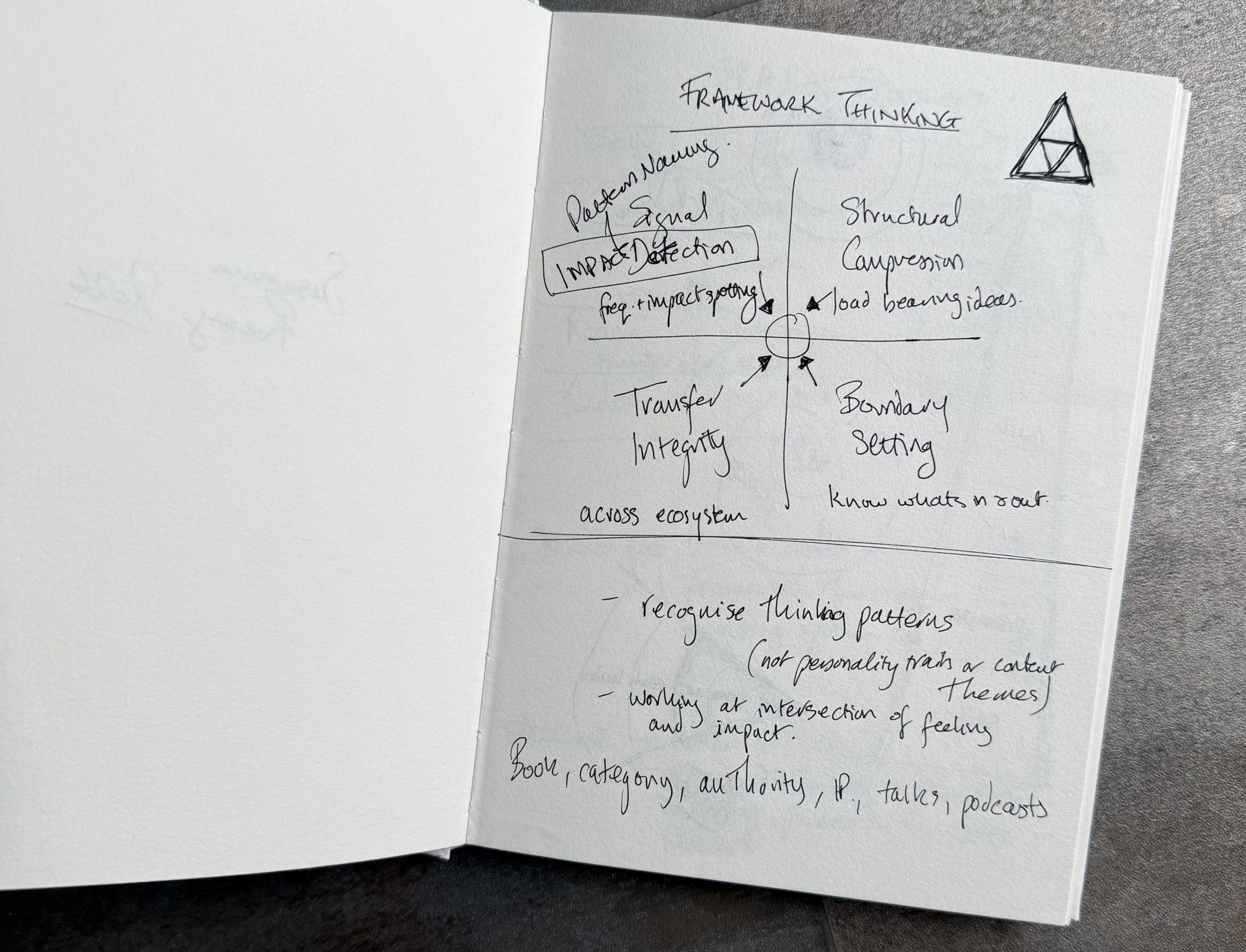
The very first sketch that started Framework Thinking®
I pulled out the actual notebook recently, because I genuinely couldn't remember what I drew first. Page one: a two by two matrix. Four quadrants. I was asking myself what the core elements of Framework Thinking® actually were, at the intersection of feeling and impact, pattern and structure.
From that matrix came four elements. Impact Detection: spotting where your thinking creates the most meaningful shift for others. Visual Recognition: the art element, the ability to make ideas visible and therefore transferable. Boundary Setting: knowing what is in and what is out, which ideas serve your business and which are simply interesting. And Transfer Integrity: the element that allows your ideas to travel without you, to hold their meaning across contexts and clients, so that you are not required to be everywhere at once.
That first diagram was a two by two matrix. But later on the same page, something clarified. I drew a triangle, and in drawing it I understood that Transfer Integrity wasn't simply one of four equal elements. It was the central, inverted triangle within the triangle: the structural core that gives everything else its solidity. Visual Recognition at the top. Impact Detection bottom left. Boundary Setting bottom right. Transfer Integrity holding the whole thing from the inside.
I didn't plan that. I sketched my way into understanding it.
The rest of the notebook is the same: few words, many diagrams. Shapes of models I had used with clients over years. The SPARK Process taking form. Ideas that had been living in conversations and workshops, finally given a visual home.
It Was Never Invented
This is the thing I most want people to understand about Framework Thinking®, and about their own frameworks too.
I did not invent this methodology. I uncovered it. Through years of working with clients, through observing what actually created lasting authority and what simply created noise, through sketching and re-sketching and testing and refining, the framework revealed itself. It was always there, latent in the work. The sketchbook just gave it somewhere to land.
I know this to be true because I found the evidence ten years ago, in a journal I created in 2016 titled Clarity for Susanna. On one of the early pages, I drew a tree. A tree with big dreams written in its branches: equality, making an impact, helping others, creativity, organisation. And there, among the branches, in my own handwriting from a decade ago: start a movement for the greater good.
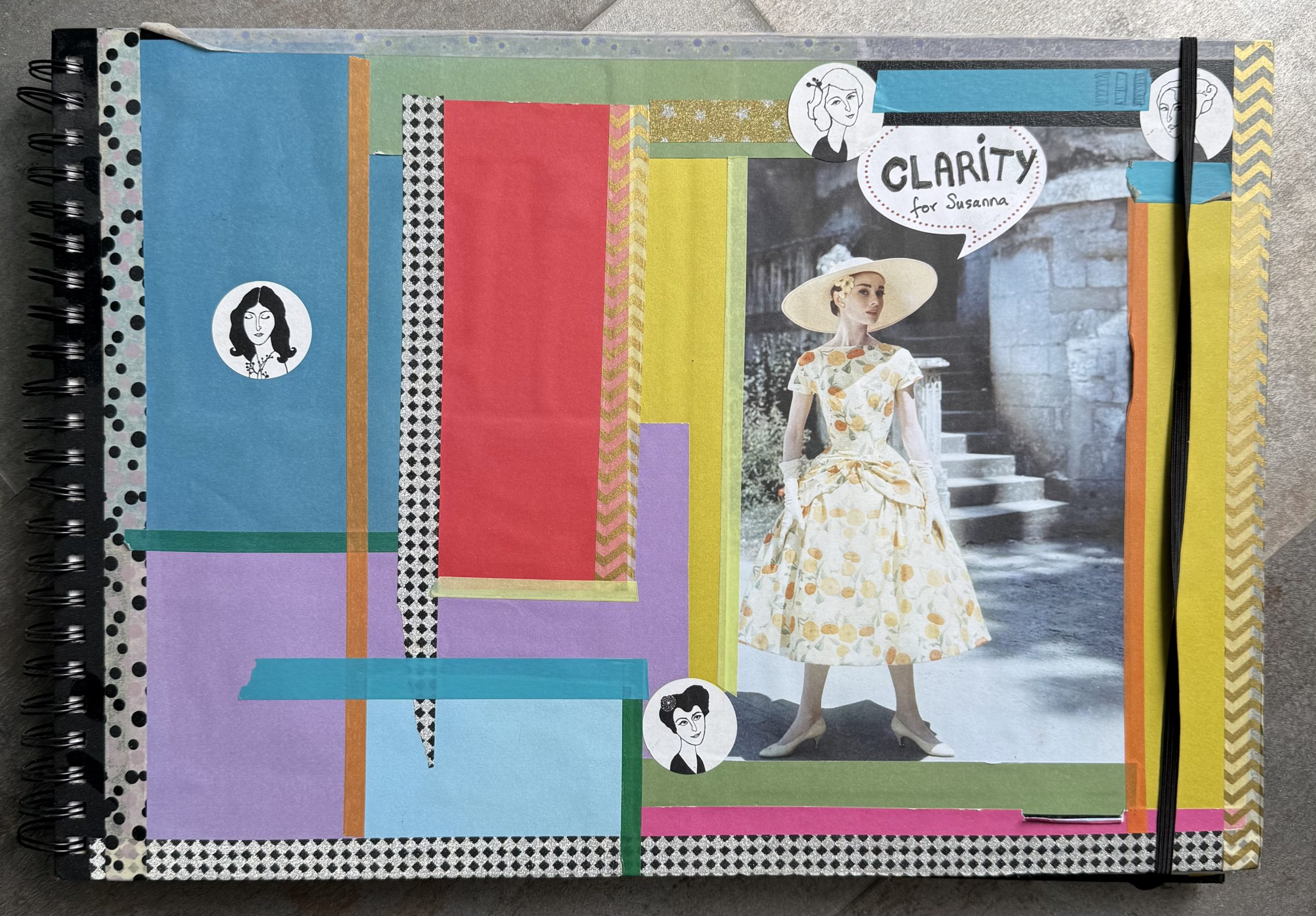
Clarity Journal by Susanna Reay 2016
Framework Thinking® as a named methodology is recent. The book was published this May. But the impulse behind it, the deep belief that the world needs new ideas, new shapes, new formats for those who want to create genuine positive change, that has been the roots of this tree all along.
The Ideas Are Still Settling
Three days on from the conference, the sketchbook is still closed. The ideas are still moving.
I already sense which threads want to be followed. The depth question: how do people who already have a framework go further, make it more ownable, bring it to the forefront of everything they build? The community question: what does a movement of framework thinkers actually look like, built on collective intelligence rather than a single voice? And the bigger question underneath both: how do we create and share ideas that are built for where the world is going, not where it has been?
Some of these threads will hold their weight on paper. Some will dissolve. That is exactly as it should be.
The beach cleared the static. The sketchbook, when it opens, will show me what remains.
If you are sitting with ideas that feel important but not yet formed, this is my invitation: don't rush the structure. Give the noise somewhere to go first. Then pick up a pen, not to plan, but to sketch. Let the load-bearing ideas show themselves.
They always do.
Framework Thinking®: Sketch. Scale. Be Sought. is available now. If you're ready to uncover the framework that's already in your work, and build the authority that lets your ideas travel without you, find it here.
